CRB is a repository of all the creative things that float through my mind about the RPG Pathfinder. Two major features are random character generation and building characters based on the god they worship. Anything that seems like it adds to the creative aspects of the game will pop up from time to time, including location descriptions, adventure ideas and even short stories. CRB won't just be my own creativity, it will open the floor to anyone who has an idea sparked by what I present to you.

Showing posts with label Themes. Show all posts

Wednesday, May 11, 2016

All For One

In a previous article I’ve touched on using a theme in your game when creating your party. The article went on to talk about two broader themes, the classical elements and Arabian nights. Today I’d like to talk about one of the other ideas I touched on but didn’t expand upon. It doesn’t happen often although I’ve done it myself one or two times, the “all one class” party.

As much as I do love the idea of the all one class party, it does pose its own difficulties. The first thing you need to overcome is the similarity of powers granted to each of the base classes. Some classes—like rogues with their rogue talents, wizards with their school specialties, and sorcerers with their bloodlines—allow for differentiation in the characters you can build at their base. Even those difference don’t always allow for a good enough spread of skills to make a group viable.

Depending on how strict you want to go with the all one class party, you could allow for some small amount of multiclassing. The combinations are pretty endless if you go this route. For many players this may seem like a substantial loss of power. Pathfinder in particular has made sticking out the full twenty levels of a base class very appealing. If you’re like me, however, a good character can outweigh the lure of power, as long as you don’t go too far and completely gimp your party.

Old school D&D introduced kits, and this helped make your character a special member of its class. 3.x D&D took this idea a bit further and brought in prestige classes, letting players branch off into specific directions for their characters. Now Pathfinder has taken the idea and added archetypes to the mix, allowing you to stay the full twenty levels in one class; although they do retain prestige classes allowing for more variations. All of these options allow you to customize your characters even further while still staying true to the same class rule.

Now that we’ve laid out how we might go about creating an all one class party I think I want to talk about of my all-time favorite ideas for a single class group: the all paladin party. For some reason the idea of holy warriors of different gods getting together interests me greatly, each going about their holy duty in their individual way. But how can you keep all the characters unique and with their own niche in the party? For this example I will stick to some of the more popular deities for Pathfinder, for those not well-versed in all their deities and those who don’t use the system.

Eris Handler

Voice of Shelyn Goddess of art, beauty, love, and music


Eris is a lover and a fighter. Blessed with both the gift for song and a silver tongue Eris wasn’t always a choir boy. His childhood was a life of grifting one the streets of Magnimar, one of the many street urchins in the city of monuments. After one petty theft too many he finally found he couldn’t talk his way out of being sentenced the hells. Luckily for him, his mark didn’t want to see a child good to jail.

Eris was taken in by a holy warrior for the church of Shelyn. After years by the side of his mentor, he was finally accepted into the ranks of the church and trained to become a paladin like the old man. Now he travels around Varisia bring the word of Shelyn to those who need beauty in their lives.

I’m picturing Eris as a Paladin/Bard a nice little synergy with the charisma stat for both class’ abilities. His early life abilities may make him seem unpaladinly at times. Who ever heard of a paladin that could pick a lock or palm a key?

Noran Wex

Wing of Apsu god of good dragons, leadership, and peace


The tales in Noran’s family always spoke of his great-great grandmother having a dalliance with a man who turned out to be a golden dragon. Although none of his forebearers ever manifested any dragon-like features or powers, the stories still drove young Noran. When he was of age he pledged himself to the church of Apsu so he could lead others into the battle against evil and bring peace to the land. Maybe it was Apsu himself or maybe it was his great-great grandmother’s dalliance but Noran eventually did manifest the abilities of a gold dragon.

For this I’m seeing Noran as a Paladin/Sorcerer (Dragon Bloodline) using his smite with his dragon-like powers. Again charisma fuels both class’ powers so we’ve got some synergy. If you want to take the theme further you could even go dragon discipline as you weren’t going to be getting to 9th level sorcerer spells anyway. Probably the most stereotypically paladin in personality of the bunch, looking to do good at every turn and admonishing those who don’t

Jalreeha Vishaharanti

Fist of Irori god of history, knowledge, self-perfection


Many of the men in Jalreeha’s family felt the call to Irori and went into the monasteries to perfect their body using martial arts. But it was Jalreeha, the eldest daughter, who felt the true calling of the ascended god; and not just  for the perfection of her body but also for the perfection of her spirit. Her father, however, was furious as he promised his daughter to the son of a noble family. The increase in the family’s stature was more important to him than his daughter. With sadness Jalreeha left home for faraway lands where she could expand her knowledge of things, adding a well-tuned mined to her already holy spirit and trained body. 

I see Jalreeha as a paladin of Irori (called the enlightened paladin on the d20pfsrd) which will replace some paladin abilities with some monk abilities. As much as I’d like to go full on multiclass monk/paladin I can’t deny needing to have at least six out of eight stats at decent levels to function well is just too much. I also picture her as the least worldly of the group learning about her new surroundings as they travel.

Branack Thunderstone

Itinerant of Lorris charity, the disadvantaged, and volunteering


Branack was an odd dwarf; he heard the calling of a deity not of the dwarven pantheon early on. The Empyreal Lord Lorris spoke to the young dwarf about charity and aid. These lessons also made him quite a bit more outgoing than most dwarves are used to. Rather than being taught the ways of paladinhood in a church, Branack learned by doing. He left his mountain home and wandered the world seeking to aid those in need. He left with but two things: a suit of armor and an odd weapon his father always kept stowed away, a pistol.

Branack will be a paladin and a gunslinger with the mysterious stranger archetype. Mysterious stranger will make gunslinger abilities work on charisma instead of wisdom. Yes, dwarves take a negative to charisma, but who cares? As for the type of character, imagine one of the samurai from The Seven Samurai. Or maybe more accurately one of the gunslingers from its American remake, The Magnificent Seven.

Have you ever played a party with all one class? If so which class? If you were going to play in a party with all one classes which would be your favorite? For our all paladin party what kind of character would you make?

If the CRB has given you some inspiration, consider becoming one of its supporters by contributing on my Patreon. Looking for more out of the CRB? Then you’re in luck. Twitter, Tumblr, and Facebook all now have a CRB presence. And lastly if you’re as impatient as I am, have the CRB pushed directly to your Kindle with every new post by signing up for Kindle Subscriptions.

Wednesday, October 7, 2015

You Reap What You Sow

It's Halloween, my favorite time of year. We’ve already got a witch hunter and a god that fights against things that go bump in the night for our October posts, but this month is about more than just ghouls and ghosts. It is also harvest season.

Harvest time, especially during the technological equivalent time on Golarion, is profoundly important. It is something pretty much every culture has in common, although they may celebrate it differently. This week we’re going to come up with some harvest festivals from a few different countries. We will touch on both human and non-human cultures as well.

First we’ll delve into Taldor, the great decadent empire, and its many serfs; then the common folk in the dark land of Nidal. Next we’ll explore harvests in the deserts of Katapesh; Halflings and their grand celebrations; and the Kellid subsistence farmers in the tainted lands of Numeria. Let’s take a look how all these folk celebrate.

The massive underclass of "the unbearded" make up 99% of Taldor's population. Even so the Taldane nobility sees most of the profit from a harvest. Taldor has a devastating tax rate and laws designed to keep the unbearded in poverty. It could be said that in arguably one of the oldest empires in Avistan the Taldane serfs are practically slaves.

But the lords of Taldor know what open revolt looks like; they seek not to go the way of Galt to the north. During the harvest season the Taldane nobility put on a show for the peasantry. After crops of have been taken in, the local lords set up a festival day. The serfs from across the land are invited to come and feast with their overseers.

Now to the Lords this is just show, let the peasants feel as if they’re equals. Many of the richer noblemen put on gaudy parade with over-the-top floats. They throw baubles at the serfs so that they may dress themselves up as kings and queens. At the feast the farmers see the return of some of their food stuff to eat, but it is of the lowest quality, with the weakest watered down ale to chase it.

The rulers of Taldane know full well that this does nothing tangible for their charges, but the hope is that it’s enough to keep them in their place one more season. Thus far things have gone as planned and serfs look forward to harvest time every year. The Taldane lords just hope they never look to the west and the free country of Andoran.

Even the plight of the Taldane serfs pales in comparison to the outright fear that the common folk of Nidal have for their overlords, the chosen of Zon-Kuthon. Nidal is a dark and foreboding place that any sane person would want to steer clear of. The peasantry is rightfully terrified that if they try and leave they’ll be flayed alive.

Harvest season may be a time for bringing in the grain from the fields and the fruit from the trees, but in Nidal the bigger fear is the harvest of the soul. As the nights begin to get longer and the darkness has more time to settle in, the more sinister creatures begin to walk the land. The Nidalese people use their harvest festival as a time to ward off these evils.

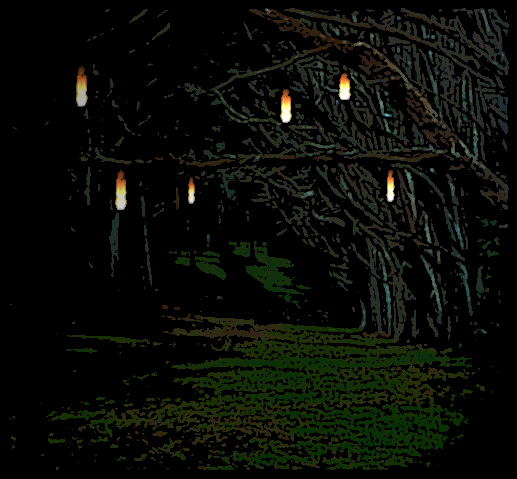
Large bonfires are built at the center of small farming towns. Lanterns are hung from the trees around the village to keep light in the dark places. Although Zon-Kuthon is the only god allowed worship within the borders of Nidal, silent prayers are made to various goodly gods for protection. The people drink and tell stories, usually the elders regale the young about the time a monster actually did come to the area. Finally at the end, some of the harvest is thrown into the bonfire to appease the dark god and keep the town safe.

Not all harvest festivals are dark or just for show, nor are all harvest festivals in the fall. In the far off reaches of Katapesh the biggest crop is the Pesh cactus. This succulent blooms in the spring and so the people of Katapesh celebrate their bountiful harvest during the blooming months when the sun starts to stay out longer.

The Avistani drug Pesh is primarily used by addicts with little more knowledge of the plant than its intoxicating effects. In Katapesh the drug is renowned for opening the mind’s eye and is highly sought after by seers and oracles of all stripes. During the Pesh harvest soothsayers from across the land will come gather at harvest sites to get the purest and freshest Pesh in hopes of seeing something truly monumental.

The Day of the Open Eye has become a phenomenon now, focused around these ecstatic holy men. Large gatherings have cropped up and the whole event has become a time to celebrate for all. Of course Pesh use, even by non-seers, is common. But it’s also a time to drink wine and eat copious amounts of food. The whole event ends in the wee hours of the morning when the last seer utters his final words. There is, of course, a chronicle on hand to record all visions spoken by the oracles.

One of the more peculiar occurrences of these Kelesh festivities is that they tend to draw Pugwampi. The mischievous little gremlins are drawn to the fact that half the people there are in an altered state and just ripe for their shenanigans. To this end halflings are always invited to the festivities, already added as good luck charms to everything from noble’s courts to trading caravans. It is thought that the halfling’s natural good luck will ward off the Pugwampi’s misfortune.

Halflings abound all over Golarion, but not all places see them as lucky charms. Much of Avistan sees them as second class citizens and even slaves. The place where halflings are the most free is within the borders of Andoran. Here halflings own land, run for office, and live happy and healthy lives. With that comes much more to celebrate about, and celebrate they do.

The halflings in Andoran usually live in small clusters of larger family groups, with a handful of extended families comprising the whole town. Calling someone “cousin” is almost always because they actually are. Cayden Cailean tends to be a very prominent god in these halfling towns and as such it can be seen in the way they celebrate.

The Halfling families celebrate the harvest, not in one feast but over the course of a few days. Each major family hosts a gathering and they desperately try and outdo one another. Not for vanity mind you, but for the honor of throwing the best party. Food, music, games and most of all beer are prevalent throughout these Halfling bacchanals. Some of Cayden’s most fervent worshipers try to (and often succeed at) staying drunk for the entire week.

Abundance doesn’t come naturally everywhere. The wastes of Numeria do not lend themselves to anything more than subsistence farming. The Kellids grow mostly root vegetables to partner with the meat they hunt for. Grains are mainly the province of larger towns that can afford to import them from Brevory or the River Kingdoms.

Lack of available space isn’t the only problem that Numerian farmers have to deal with. The metals and runoff that have made their way into the land after falling from the sky have poisoned much of the soil. Sometimes these contaminants are unnoticed until too late, and they don’t just kill off those who eat the tainted food. Sometimes the tainted food eats them.

Legend among the Kellids speaks of the night of the killer potato; when the alien liquids had seeped into the land mutated one of the Numerian farmer’s spuds into a perverted form of life. The homicidal potato murdered the farmer and devoured others in the village before running off into the night. Many Kellids swear that the mutant potato still roams the Numerian wastes.

During the harvest season much of the food must be checked for contamination. This process has helped form the somber harvest ritual that many Kellid tribe go through before their meager victuals can be eaten. Not every part of their ceremony is dour. Usually one of the younger men of the tribe will dress up as the mutant potato and chase around the kids, who in turn whack him with sticks. When the Potato man finally “dies” the children are offered tasty treats for their heroism.

And there you have it, five different harvest celebrations. But Golarion is a big place and there are probably many other harvest traditions. Be it Golarion or Homebrew, figuring out the important customs of a people helps shape the culture. So what are your harvest ideas?


Wednesday, September 30, 2015

World Building - First Steps and Factions

In last week’s world building article we touched on prep and research and it got a lot of response. Today we’re going to touch on the next step in the process. The problem is the next step in the process is subjective. It’s all about the idea that sparked in your mind to start your world building idea.

Some people mentioned they liked to start with a map of where they are creating. Whether you’re working on a full world, a country, a province or just a city as we are. Some people want to start with NPCs, some with the military and there are a hundred other places you can begin from. In this instance what catches my fancy is factions.

In my mind this city is still just barely moving out of chaos. The write up for Lung Bingci showed that his father was the first recognized Jueyin (roughly Duke) of the City of the Whispering Winds. With a newly recognized noble there are bound to be groups trying to gain his favor, depose of him, use his ascension for their own ends or control him like a puppet. If I can lay these things out in my head I think I can get a better idea of what the city will be like.

These factions are not fully formed with a list of members but they are ideas of what forces are moving around within the city itself. Once we have the factions laid out the discussion of who belongs in which faction becomes easier and opens the flood gates to actual NPCs. Again this is just my process and my starting point, you can start somewhere else and leave factions for later if you like.

The Royal Family

Since we’re basing this on the character write up I did it will just be the Jueyin (roughly Duke), his wife, three children and I will probably add a brother or two. I’m thinking one who backs his brother and one who secretly seeks his position. Family infighting is always a good plot hook.

The Royal Court

The duke and his brothers of course will be included. I’m thinking an emissary from Tengu to keep an eye on things. Probably a trade leader of some kind as well as the royal treasurer. I’m thinking the older brother controls the military but maybe a captain of the guard advises on internal issues. There could be more but this is just bare bones.

Thieves’ Guild

We won’t call them the thieves’ guild of course that’s boring. However, we’re talking about Ratfolk here and to not do a large organization of cutthroats and thugs would be a grave disservice. In this case though I don’t see them as being completely adversarial to the new nobility. Growth of the city means further opportunities to make money and I can see this guild aiding the local government on the sly.

Cult of a dark god

Again these are very vague ideas, but I really enjoy religion in polytheistic worlds. I’m thinking maybe a god of plague or pestilence. If we wanted to go really evil they could be worshipers of the Horsemen of Pestilence.

Plot to over throw the Duke

This faction was actually one of the first to pop into my head. Just a group that doesn’t want a royal line and seeks to remove the Jueyin and his heir. Secretly aided by one of the Jueyin’s brothers of course, because family squabbles are the bread and butter of political intrigue stories.

And that’s just what I have off the top of my head right now. But that leads me another minor topic, bouncing ideas off other people. One of the best ways to create is to talk things out with someone else. I have a few friends that I bounce ideas off of. I also post to facebook and reddit with the hope that I can get a dialogue going with more people. The more ideas you open yourself up to, the better your creation will be.

So those are the factions I’m going to flesh out soon. Do you think there are other factions that should exist within the City of Whispering Swords? Other major players within the political fabric of the city’s reality? Let us know what you’re thinking.

Wednesday, September 23, 2015

World Building - Prep and Research

a map with a compass on it the words World Building over it
A friend of mine, a guy who plays in some of my games and runs the Rise of the Runelords game I'm in, has convinced me to talk a bit more about actual world building. The thing is it's a massive topic and just talking about it doesn't always help. So he's also talked me into doing a series of articles where I do some basic world building.

Now some of the old time GMs will already have world building down, but even the best GMs know that there's always more to learn. A lot of this will be good for first time GMs and people interested in expanding the worlds they're in. I'm also sure people will have a lot to add to the topic. But these will just be my views and my process, it may not work for everyone but it works for me.

So when I was an early GM I wanted to build my own worlds something fierce. I always had a million and one ideas and I wanted to shove them all into one place. A culture like this, a city like that, a monster race that had its own civilization. The thing is building a world from scratch is not that easy. So we're gonna focus this particular exercise on expanding an existing world, in this case Golarion, to fit our needs.

A lot of people dislike kitchen sink worlds, a game setting that has a little bit of everything so that you can mix your roman based civilization and an asian based civilization with slightly off technology levels. For a writer and a GM kitchen sink worlds can be a boon. It gives you the option to tell the story you want to tell and you can change stories and themes without having to change worlds.

The idea I'm going to run with is one that I started when I wrote my character background for Lung Bingci. On the continent of Tian Xia there is an area that is ruled by Tengu and in this area there is a city that is controlled by Ratfolk. Now eventually I'd like to flesh out the entire area of the Tengu lands, but to begin I'm going to just start with the Ratfolk city. One of the toughest things for a writer to do is focus on one thing when so much is going through their head. But aiming so big from the start is also one of the reasons a lot of writers fail.

So the first thing you need in prep is an idea. We've covered the idea, a Ratfolk city in the midst of a Tengu controlled area of Tian Xia. The next thing we need to do is research. Now whether you're building your own homebrew world or working with an existing one it is best to know what you're talking about. If your idea for a homebrew is a roman based civilization with a senate, then you'd better know how the roman senate worked.

I've already done a lot of the research for the character I wrote so I'm just going to post a few links. All of these are from the Pathfinder wiki which is invaluable when trying to find information that is spread out over a number of game books and possibly novels and web tales.

Here is where we learn about the Ratfolk invasion of Tian. That's right the Ratfolk swarmed up from the Darklands and claimed a dozen or so provinces before faltering and being driven back. Not what a lot of people think of when they think Ratfolk but it also tells us about a Ratfolk controlled city.
The page also mentions a city of Ratfolk called, the City of Whistling Swords. Now there is zero information on the city itself which is perfect for our use because we want to create something uniquely ours.

The Tengu nation on the western coast of Tian Xia. Again not a lot in there but good for our purposes. When we expand out from the City of Whispering Swords at some point it gives us a lot of freedom to run with. Although it does list a ruler

A half celestial Tengu and cleric of Hei Feng. She’s spiritual leader to the people of Kwanlai so I would imagine Hei Feng would be important to the Ratfolk as well.

Something I had to look up because the character I wrote was the son of a noble. You’re going to one some kind of immersion and being an Asian (mostly Chinese) analog it’s good to work with some things that will keep you in the world.

And there we go, we’ve prepped and researched. We took our idea and decided where to begin. We’ve researched the area we’re working with and the kind of people that we’ll be dealing with most. And we’ve looked at some possibilities for the future of our project. 

Next time picking a starting point and working our way out. 

Do you have any ideas for our Ratfolk city? Make sure to check out the character background and see what I’ve already decided is true.

Saturday, September 19, 2015

It's a Mystery to Me

a halo with runes inscribed on it-Erecura's Holy Symbol Pathfinder
It’s Saturday and it's time to talk about a god. For those of you who haven’t been a part of my explorations into the religions of Golarion here’s how it works.

Imagine if you will you're making a character for a group. Your only instruction is that you must be a worshiper of a specific god. You do not need to be a divine casting class although you can be, but the groups purpose is going to be working toward the goals of this specific divine being. And I'd like not just a race class combo, but a little bit about why the character would choose to dedicate him or herself to this god. Feel free to make up secret or not so secret orders within the church. Or even sects outside of the church you think might be interesting. With only this one piece of information that must be true let your imagination go wild with the rest.

Today's god
Erecura LN goddess of Deduction, mind reading, subtlety
Erecura’s Pathfinder Wiki page 
Erecura’s Archives of Nethys Entry 

So it dawned on me the other day that most of the stuff I write is pretty serious. Even when I write about good guys there's all this prophesy and darkness. But pathfinder can be a fun game to play, if you allow the comedy in.

I took some time to ask around about Erecura on a few facebook pages and subreddits and someone made a comment and then I joked about it sounding like something from my childhood. It made me laugh and I said to myself that's what I'm gonna write about, something that amuses me.

So here goes the party of Erecura worshipers I came up with based on a passing phrase.

A group of characters, a male paladin with an orange ascot, a female investigator with short brown hair and glasses, a great dane, a male hunter in a green shirt and a female red haired oracle in a purple gown

Afriedo, Paladin of Erecura

Born in Ustalav a land filled with darkness and mystery this noble knight has dedicated himself to shining light on the hidden things. Young, he still leads a group of three others who have dedicated themselves to the lady of deductions. Known for his shock of blonde hair and orange neck covering he has thwarted many a plot, especially those hatched by followers of Norborger who plague the lands of Ustalav.

Velamara, Empiricists Investigator

Exceedingly bright for a girl her age Velamara seeks out the truth in all things. She joined with the group during a mysterious plague in a small town in Ustalav. It turned out a local farmer was actually a follower of Urgathoa who was trying to slowly infect every person in the area. And he would have gotten away with it too.

Ephane, Oracle of Lore

Born into a minor noble family Ephane had her life laid out before her. Servants, balls and an arranged marriage all lay in her future, until the day the visions came. Visions that let her see more than she was supposed to. A cult of Norborger dead set on hiding an ancient artifact came calling to remove the seer, but she was rescued by a dashing paladin. Trying to keep one step ahead of Norborger's minions she joined with Afriedo and his friends on their mission of exposing the hidden things in the world.

Zashugio aka "Shug," Hunter

Zashugio is the childhood best friend of Afriedo although he took a slightly different path. Shug's dedication to Erecura is more dedication to his friend but he still espouses the mission of a light to all darkness. A bit nervous and sometimes outright cowardly he takes solace in the companionship of his canine friend. And with Afriedo the three have begun to figure out the intricate web of mystery that shroud the land of Ustalav.

I'm sure it's not hidden too hard. Can you figure what struck me for the idea of this group? And who would your worshiper of Erecura be? Let us know.

Wednesday, September 2, 2015

The Myth of the Perfect Party

Well now that I’ve got your attention, it’s not so much that the “perfect party” is a myth as much as I’m about the creative side of the game. I am at heart a math guy and we cannot deny mechanics. Build a strong base with a front line fighter, a healbot, an arcane blaster or battlefield controller and a support person with a sizable damage output but also with all the skills you need to survive a dungeon can mean a much easier go for your party.

A half orc in armor, a cleric hold up his holy symbol, a halfling archer and a wizard in a pointy hat-pathfinderWhat “perfect party” math doesn’t always add up to is fun for the entire group. I remember when we first started playing basic D&D from the redbox as a child of all of eight. I always got stuck playing the cleric, because it was said the party had to have a healer as part of the core perfect adventuring group. And even now I see ads on LFG sites where they want someone to fill a specific spot because a party needs to be a certain way.

But I’ve found over time that you don’t need the “perfect party.” Yes some things might be tougher to tackle as one type of group then another. But finding ways to solves problems that may not be the usual expected way is part of the fun of gaming. Can you deal with undead without a cleric? Yes. Is it easier to deal with if you have one? Also yes, but not impossible.

I got to sit in on a Kingmaker group for a bit that was all arcane spellcasters. All started out as wizards although I think a few of them multiclassed. At least one was a mystic theurge. They certainly weren’t the “perfect party” and I imagine the first few levels were tough but they made it to level 7 when I got to play with them and they were all having a blast in their magical kingdom.

My group started Rise of the Runelords a few months ago and when we sat down to make characters no one was asked to pick certain traditional roles. We all just came together to make the characters we wanted. We ended up with a Varisian cartomancer witch, a Samsaran time mystery oracle, a Teifling firebug blasty wizard and my Aasimar sleuth/steelhound investigator. And no one ever thought twice about not having a front line fighter.

Now even though I don’t think you necessarily need to worry about fitting the specific roles that would make up the “perfect party” I do believe in making sure players have their individual niches. But that is a discussion for another time.

What have been some of your favorite oddball groups? And how well have they survived the trials of being an adventuring party? Let us know in the comments.

Wednesday, August 19, 2015

The Theme is the Thing

Theme parties from the games where everyone is one race or one class at the start to parties based on other things, like the fairytale game I ran where everyone played a storybook character. A lot of times your party is just a mish mash of individuals with little in common other than a need for adventure but sometimes it’s fun to build to a broader theme.

I’m particularly fond of theme games and I’ve had great success with an all Halflings campaign, an all paladins campaign, all worshipers of the same god campaign and my aforementioned fairytale campaign. Although I understand these ideas may not work for everyone, at the very least they are a good thought exercise for a GM or player. To that effect today we are going to look at a party I’ve had in mind since D&D 3.5 when I was obsessed with the Faerun region called Calimshan.

A sultans palace, Arabian architecture, Pathfinder

To start with the party I had in mind had not one but two themes. The first is pretty obvious, being from Calimshan with its whole Middle Eastern analog thing going on we have an Arabian Nights theme. But since the party started with the idea of two brothers one an Air Genasi (Sylph in Pathfinder) and the other a Fire Genasi (Ifirit) I thought a four elements theme might make the party just a little more interesting.

The Party

First we need to switch the party over to pathfinder from 3.5. After each party members conversion will be a brief description of the party member and their place in the theme.

Pathfinder, The four elements, earth, air, wind and fire symbols quartered over images of the same.
Air - Sylph Swashbuckler whirling Dervish Archetype

The original version was a fighter with Dervish Dancer PrC I think this fits the character best.

Nasim Nejem ibn Hudad one of a pair of twin sons born to the chief of the Asdeqa'a Raml tribe. Born with the blood of the great Djinn flowing through his veins Nasim grew up destine to join the ranks of the great dervishes of the tribe. Moving through the hot desert air like a whirlwind with blade flashing with the light of the beating sun. The young warrior is good natured if flighty. He always seems to be laughing and takes very little seriously. His mind has 1000 thoughts a second and the only time he seems to be able to concentrate is when he is lost in the dance of the dervish blade.

Fire - Ifirit Elemental (Fire) Bloodline Sorcerer

There weren’t bloodlines in 3.5 but this is the obvious choice. Although Ifirit have a race specific Sorcerer archetype this fits better.

Shihad Nejem ibn Hudad, brother to Nasim, born with the fiery blood of the ancient Efreet coursing through his body. Whereas his brother is wistful Shihad takes everything seriously. The fireborn mage takes everything as affront and his temper has been known to get the better of him, often. The fire in his heart has manifested itself by pushing out into the world around him. Although his brother is the combatant Nasim never looks to fight, but Shihad thinks everything is a battle that can be won in burning flames.

Earth – Human Ranger

Bare bones dunes rider eventually with a camel animal companion.

The desert wastes are hard on the nomad tribes, but among the people of the sands come hardy travelers. Some of these desert born even go so far as being able to track the smallest creatures over the windblown sands of Casamaron. Wajid El-Amin knows the truth of the desert and aids his tribe in picking the way among the dunes. The dune rider is known for his adeptness on the back of the camel and for fact that he has never spoken a lie. Wajid has rooted himself in the sands and as such has little time for falsehood, or apparently merriment either.

Water – Gnoll Hydrokineticist

This one was the hardest to change over. First off originally he was a Bhukas, a desert living Goblinoid from the 3.5 sandstorm book. The point was he was a monstrous race geared for the desert to that end Golarion has their Gnolls as desert dwellers.

Secondly he was also a druid going into the PrC Lord of Tides, which deals with water in the desert. None of the druid archetypes really fit this theme but the new occult adventures Kineitcist using Hydrokinetics really fits the bill.

Among the desert dwellers the Gnoll are known for their barbaric and cannibalistic ways. But not all Gnolls are created equally. Left for dead by his own people Water-Seeker had picked his way through the desert for five long years before being found among the wastes. The pathetic creature, nothing more than skin and bones at the time was spared by Nasim and Shihad’s father. The tribe has never regretted the decision as Water-Seeker has lived up to his name being able to find a source of fresh water from miles off.

I’m not going to really go into the mechanics of the characters. Once you get past the base race/class thing all you need is the story and the other mechanics can be added to your taste. But there you have it, a very Arabian Nights themed party with a secondary theme of the four western elements.

What themes have you always wanted to try?